Every December I promise myself I won't open a spreadsheet until January, and every December I last until roughly the 27th. This year I'm trying a new tactic, which is keeping my hands busy with a book.
Here are five that have worked on me. Four are by people who are much better at this than I am. The fifth is mine, and I've put it last so you can stop reading before you get there.
1. The Psychology of Money by Morgan Housel (2020)
Housel writes about money the way a good uncle talks about it after the second glass of wine: lots of stories, no formulas, and an irritating habit of being right. The chapter that stayed with me argues that getting rich and staying rich need almost opposite skills. That is an awkward thing to read after a year of building models that assume everyone behaves rationally.
Take it to the pool. Each chapter is about one drink long.
2. Barbarians at the Gate by Bryan Burrough and John Helyar (1990)
The RJR Nabisco buyout of 1988, a bidding war that ended at about $25 billion and involved more ego, private jets and golf than any deal has a right to. The bit about the company's fleet of corporate planes is worth the cover price on its own.
It is also, almost by accident, the best explanation of how an LBO works that I've come across, and I read some truly dreadful ones while studying for the CFA. If you finish it itching to do a deal yourself, I built a 1984 LBO game called Raiders of Wall Street for exactly that itch. Nobody gets hurt and the cigars are imaginary.
3. The Big Short by Michael Lewis (2010)
Lewis found a handful of misfits who actually read the mortgage bond documents everyone else was too busy to open, then bet against the US housing market before it fell over. One of them was a doctor with a glass eye running a hedge fund from California, which is not a character you could get away with in fiction.
I find the book comforting and mildly terrifying. Comforting because their edge came from doing the boring reading. Terrifying because I know how many assumptions tabs I've signed off on a Friday afternoon.
4. Narrative and Numbers by Aswath Damodaran (2017)
This is the homework book. Damodaran's case is that every valuation is a story with numbers attached, and if you can't tell the story out loud then the numbers are decoration. He then makes you tie each assumption back to something you could defend in front of a sceptical investment committee. Having started sitting on one, I can confirm those people exist and they do ask.
Save it for the dead days between Christmas and New Year, when the leftovers have run out and you've started checking email "just quickly".
5. The Idle Hour by Matthew Bernath
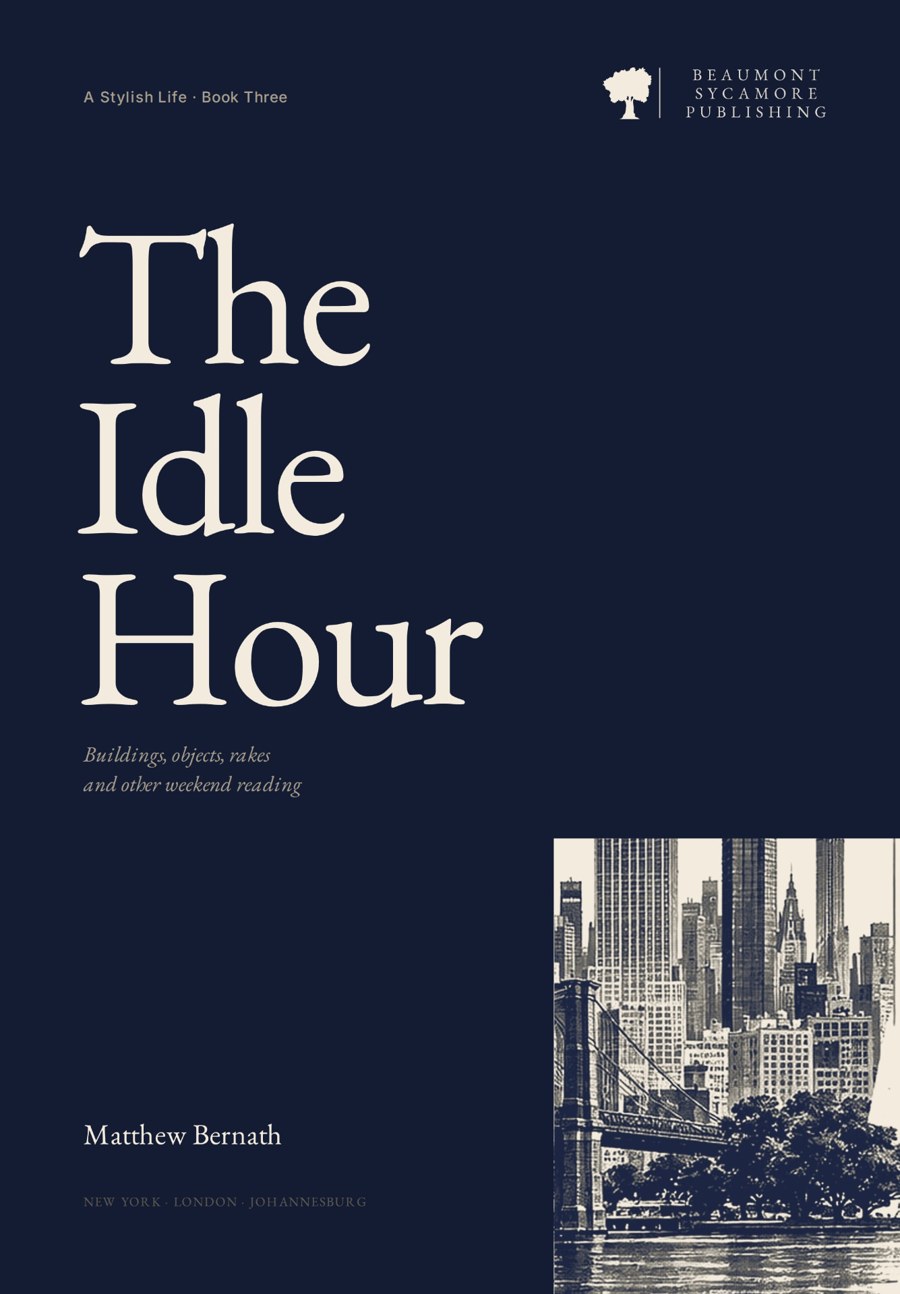
Now the self-promotion. Apologies in advance.
I wrote The Idle Hour for the Saturday afternoon when you want to read something good but would rather chew glass than read anything resembling work. It wanders about: buildings in New York and London, where the loafer came from, why the fountain pen refuses to die, operators who built real things, a few charts and mental models. There's also an Excel problem in there, because I seem incapable of writing a book without one.
Most pieces take about as long as a coffee. If you hate it, at least it was short.