
Disclosure: Some of the links below are affiliate links, meaning, at no additional cost to you the Financial Modelling Podcast may earn a commission if you click through and make a purchase.
Data Analytics Book Recommendations - Part 2
With so many great data analytics books coming out, I needed to provide an addition to my data analytics book recommendations. If you haven't checked out Part 1 yet, these books are my go-to guides for beginner to advanced data heads (to steal a phrase from Jordan Goldmeier).
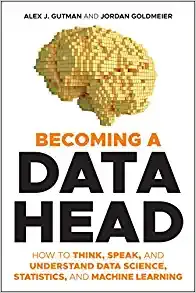
Becoming a Data Head: How to Think, Speak and Understand Data Science, Statistics and Machine Learning
I love this book so much I purchased both the Kindle version as well as the physical copy. This is the ultimate guide to data and analytics for everyone from novices to managers, and is a good reminder of some basic analytics principles! Jordan and Alex have done a tremendous job of writing a highly readable and thought-provoking book outlining many key data analytics concepts. If you end up following Jodan on LinkedIn, you will also be pleased to note that he regularly posts analytics inspired jokes, some of which are even funny.
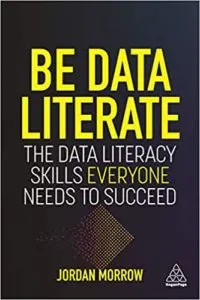
Be Data Literate: The Data Literacy Skills Everyone Needs To Succeed
Jordan Morrow is someone I highly respect as a data scientist. In this book, Jordan succinctly explains the four levels of data analytics (Descriptive, Diagnostic, Predictive and Prescriptive) and how they can be implemented in practice. He also provides a step by step guide on how to make data-informed decisions. Finally, he speaks to the analytics strategy and how to elevate analytics in the organisation, with a big focus on one of my favourite areas - data-driven culture. That reminds me, do you attend the Johannesburg Data Science Meetup? If not - sign up here!
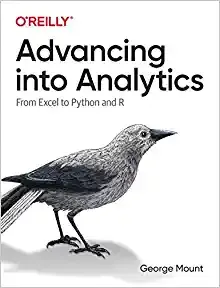
Advancing into Analytics: From Excel to Python and R
It's no secret that I'm a huge Excel fan - coming from a financial modelling and VBA background does that to you! That said, I truly believe Excel is an underutilized data analytics tool. Advancing into Analytics by George Mount spends a good four chapters explaining statistics and analytics in Excel. It then progresses to R and Python, explaining the fundamentals one needs for data analysis. A perfect introduction into the first few tools one should investigate for data analytics while alluding to business intelligence platforms and other tools.
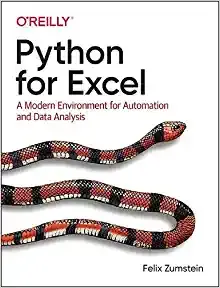
Python for Excel: A Modern Environment for Automation and Data Analysis
Traditionally I always used VBA in Excel, and taught many classes on VBA and macros. I always felt like there was room to take Excel to the next level with Python, and this book by Felix Zumstein answers my questions! This book is for those VBA addicts who wish to expand their repertoire, or for those wishing to automate and perform analysis in Excel without the limitations of VBA - which it should be noted Microsoft is not officially supporting anymore although it will always work in the desktop version of Excel (or else I need to recode a few models...). This book takes one through a Python IDE, some Python basics such as pandas as well as xlwings, which allows for the automation of Excel via Python scripts or Jupyter notebooks.
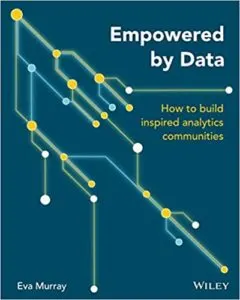
Empowered by Data: How to Build Inspired Analytics Communities
I've spoken before that data-driven behaviour largely comes down to culture. And I've found from experience that culture is best built from the ground up (with a few helpful nudges from the executives at the top). This book by Eva Murray explains step by step how to build a data analytics culture through a strong data analytics community. I might be biased as data communities are something I'm passionate about (have I mentioned the Johannesburg Data Science Meetup yet?), but this book really speaks to me. Empowered by Data illustrates why analytics communities aren't just beneficial for the individual members, but for the organisation as a whole. It then takes a step beyond preaching by providing practical steps on how to start, and even measure community growth and improvement (we are into data after all!). If you want to drive analytics growth through a passionate community, this is the book to read.
That's it for Part 2 of my Data Analytics Books Recommendations. I hope that my recommendations will help you make a data-driven decision when it comes to your next book purchase! I'm sure with the amount of analytics-focused books released it is only a matter of time before I post Part 3.
Matthew