
Advanced Financial Modelling Techniques
Unveiling the Power of Monte Carlo Analysis
In today's fast-paced financial environment, the ability to predict and plan for uncertainty is more valuable than ever. Advanced financial modelling techniques, such as Monte Carlo analysis, play a crucial role in helping analysts and investors navigate the complexities of modern markets. This blog post delves into the depths of advanced financial modelling, with a special focus on the Monte Carlo method, exploring its applications, benefits, and how it can be used to enhance predictive accuracy and decision-making in finance.
The Essence of Advanced Financial Modelling
Advanced financial modelling involves using sophisticated algorithms and statistical tools to forecast the financial performance of projects or investments. These models are crucial for risk assessment, strategic planning, and investment decision-making. They incorporate various inputs, including hypothetical variables and real-world data, to simulate potential outcomes and inform better financial decisions.
Monte Carlo Analysis – A Primer
The Monte Carlo analysis is at the heart of advanced simulation techniques—a method used extensively across finance sectors, including project finance, risk management, and investment analysis. Named after the famous Monte Carlo Casino due to its inherent randomness (and actually after a physicist's aunt I believe, who gambled there, but I stand to be corrected!), this technique uses random sampling and statistical modelling to predict the probability of different outcomes when the intervention of random variables is present.

How Monte Carlo Analysis Works
- Definition of Probability Distributions: Initially, the model requires a clear definition of all relevant variables. For financial models, these could include interest rates, market risks, and other economic indicators, each described by a probability distribution.
- Random Sampling: Monte Carlo analysis runs thousands, or even millions, of trials, each time picking random values for each variable from their respective distributions.
- Calculation of Results: For each simulation or trial, the model calculates the results, which typically include NPV (Net Present Value), IRR (Internal Rate of Return), or other relevant financial metrics.
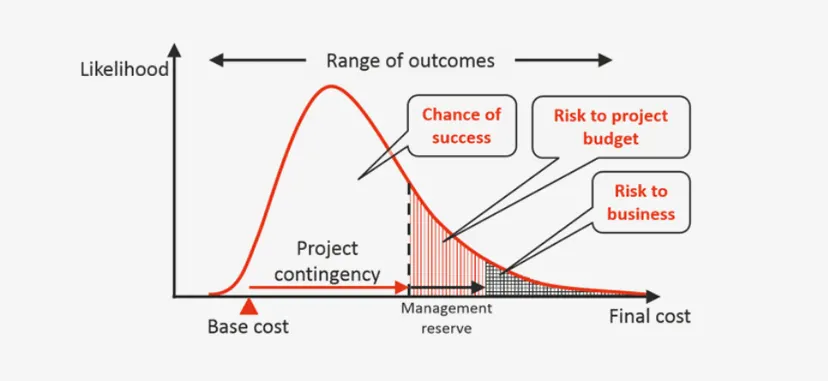
- Analysis of Outcomes: The outcomes of each run are then compiled to create a probability distribution of all possible outcomes, providing a comprehensive view of potential risks and returns.

Applications of Monte Carlo Analysis in Finance
- Risk Assessment: By simulating a wide range of outcomes based on the random variation of input variables, Monte Carlo analysis helps identify and quantify risks in investment portfolios or project finances.
- Portfolio Management: This technique is used to simulate the future performance of a portfolio and assess the probability of achieving specific financial goals, helping portfolio managers in asset allocation and risk diversification.
- Pricing Derivatives: Monte Carlo simulation is crucial for valuing options and derivatives where the payoff depends on the stochastic behaviour of the underlying assets over time.
Benefits of Using Monte Carlo Analysis
- Handling Uncertainty: It provides a robust way to model scenarios involving significant uncertainty and to assess the impact of various risk factors on project or investment outcomes.
- Broad Applications: It can be applied across different domains of finance, regardless of the complexity of the models.
- Enhanced Decision Making: By providing a probabilistic range of outcomes rather than a single point estimate, it aids in making informed, data-driven decisions.
BUT BEWARE - the probability curve you use is key. I learnt this by building a Monte Carlo Simulation for a wind farm, but wind actually has a Weibull distribution.
Conclusion
Monte Carlo analysis represents a pinnacle in the field of financial modelling, offering a sophisticated tool for managing the uncertainties inherent in today's financial markets. Whether you are a financial analyst, a portfolio manager, or involved in corporate finance, integrating Monte Carlo simulations into your financial analysis toolkit can significantly enhance your ability to make informed decisions and strategically plan for the future.
For finance professionals looking to stay ahead of the curve, mastering Monte Carlo and other advanced modelling techniques is not just beneficial; it is essential. As markets continue to evolve, so too must our methods for understanding and forecasting their movements. Embrace the complexity, and let the data guide your decisions.