
Project finance continues to be a critical enabler for large-scale infrastructure and energy projects worldwide. In 2025, the industry is undergoing significant changes driven by global trends and technological advancements. Here are the five key trends reshaping project finance today.
1. The Rise of Energy Transition Projects
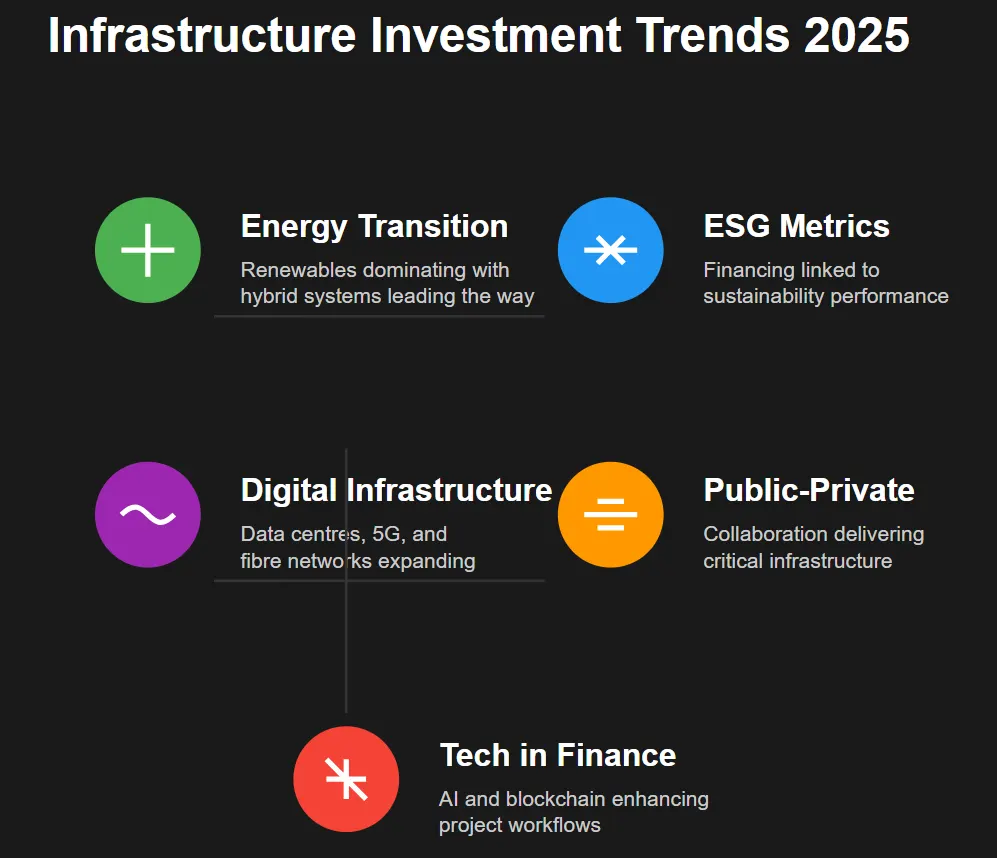
As the world focuses on sustainability, renewable energy projects—such as wind farms, solar plants, and battery storage systems—have taken centre stage. Hybrid energy systems that combine renewables with traditional sources are also gaining traction to ensure reliability and grid stability.
Why It Matters:
- These projects are complex, often involving carbon credits, government subsidies, and fluctuating commodity prices.
- Financial models must now accommodate dynamic revenue streams and sensitivity analyses around energy prices and carbon taxes.
2. Increased Focus on ESG Metrics
Environmental, Social, and Governance (ESG) criteria are no longer optional in project finance. Investors, particularly development finance institutions (DFIs) and green bond issuers, demand rigorous ESG reporting and link financing terms to sustainability outcomes.
Why It Matters:
- Many financing deals now feature performance-based incentives, such as interest rate reductions for meeting ESG targets.
- Modelling these incentives requires incorporating ESG-linked performance metrics into cash flow projections and debt repayment schedules.
3. Growth in Digital Infrastructure Projects
With the global reliance on technology growing exponentially, investments in data centres, fibre optic networks, and 5G infrastructure are surging. These projects offer predictable cash flows, often secured by long-term contracts with technology companies.
Why It Matters:
- Financial models must account for granular data usage forecasts and the potential risks of technological obsolescence.
- Stress-testing demand growth scenarios and assessing regulatory risks are crucial to ensuring project viability.
4. Blurred Lines Between Private and Public Financing
Governments increasingly rely on private capital to fund essential infrastructure through Public-Private Partnerships (PPPs). Fiscal constraints have also led to the rise of blended finance structures, where concessional loans from development agencies combine with commercial financing.
Why It Matters:
- These arrangements require careful modelling of risk allocation between public and private entities.
- Sensitivity analysis around availability-based payments, regulatory risks, and performance penalties is critical.
5. Technology Driving Efficiency in Financing
Advancements in technology—such as AI, blockchain, and advanced analytics—are transforming the project finance landscape. Blockchain is being used for transparent payment tracking, while AI enhances risk identification and optimises capital structures.
Why It Matters:
- Financial modellers must embrace tools like Python and Power BI to supplement traditional Excel models.
- These technologies improve efficiency, accuracy, and the ability to handle increasingly complex scenarios.
Key Takeaways
The project finance industry is being reshaped by sustainability, technology, and evolving financing models. Whether you’re a project finance professional or a financial modeller, staying ahead of these trends is essential to remain competitive and add value to your projects.