
Brief History of AI in Investment Banking
Investment banking has been dramatically influenced by the onset of Artificial Intelligence (AI). From a time when bankers relied on human cognition, intuition, and traditional business methods, we have progressed to an era where algorithms can now process and interpret vast amounts of financial data at speed and scale. The adoption of AI in investment banking began to gain traction in the early 2000s. The digitisation of financial services and the exponential growth of data called for innovative solutions to manage, interpret, and generate insights from this information surplus. Early AI applications were simple, mostly restricted to automating repetitive tasks. However, as AI technology evolved, more sophisticated applications emerged, leading to substantial shifts in investment banking functions.
Technological Trends in Investment Banking
The investment banking landscape is changing rapidly with the advent of technology. As in other sectors, technology in investment banking is employed to increase efficiency, reduce human error, and enhance service delivery. Some of the current uses of technology in investment banking covers: Artificial Intelligence and Machine Learning: AI is used to automate repetitive tasks, enhance financial analysis, manage risk, and improve client service. Machine Learning (ML), a subset of AI, helps predict market trends and behaviours using historical data. Big Data Analytics: Investment banks manage vast amounts of data. Big data analytics collects, processes, and analyses these massive datasets to derive actionable insights and enhance decision-making processes. Blockchain Technology: Although still in its nascent stage in investment banking, blockchain has the potential to revolutionise various banking processes such as clearing and settlement, KYC, and fraud prevention. Robotic Process Automation (RPA): RPA automates routine tasks like data entry and reconciliation, freeing up employees to focus on more strategic tasks. The rise of these technologies is reshaping the investment banking industry and setting the stage for applying advanced AI models like ChatGPT.
Leveraging AI for Equity Research: The J.P. Morgan Chase Story
J.P. Morgan Chase has long been a pioneer in adopting emerging technologies. Their AI journey took a significant leap forward with the introduction of AI applications into their equity research practices. AI has proven to be a game-changer in the complex field of equity research, which involves examining financial data, forecasting future performance, and making investment recommendations. J.P. Morgan Chase has integrated machine learning and natural language processing (NLP) techniques into their equity research operations. These technologies have been used to automate data extraction, processing, and analysis from various sources, such as financial statements, earnings call transcripts, market data, and news articles. The bank uses AI to read, interpret, and summarise financial documents, making the process much quicker and more accurate. Machine learning algorithms aid in discerning patterns and relationships in financial data, enhancing the efficiency and depth of equity analysis.COIN: Contract Intelligence Platform
 In 2017, J.P. Morgan Chase launched COIN (Contract Intelligence), an AI platform that uses NLP to review and interpret commercial loan agreements. Initially intended to minimise human errors and speed up the review process in loan agreements, the bank later extended COIN's application into the realm of equity research. The system proved capable of reviewing complex financial documents, extracting key data, and providing insights, making it a vital tool for analysts.
AI in Action: Real-Time Equity Analysis
A notable instance of AI in action was during the quarterly earnings season. As companies released their reports, J.P. Morgan's AI systems could quickly digest and analyse the information, enabling the bank's equity researchers to provide real-time analysis and recommendations to clients. The efficiency of AI not only saved analysts' time and provided them with enhanced insights, which they leveraged to make informed and timely investment decisions.AI and Financial Analysis: The UBS Story
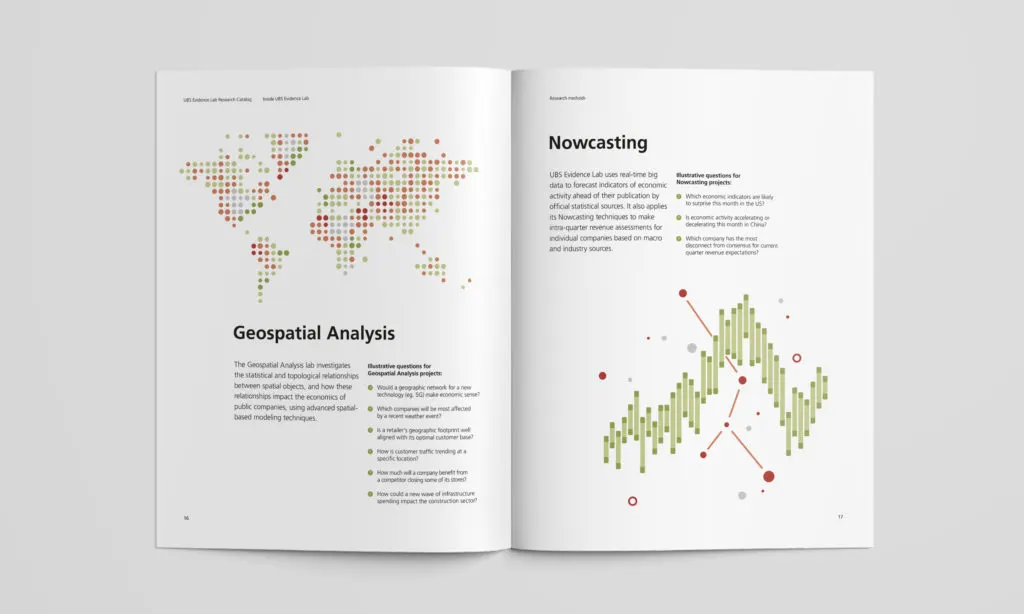
Swiss multinational investment bank UBS is no stranger to the application of AI in its operations. Recognising AI's potential early on, UBS has been instrumental in integrating this advanced technology into its financial analysis practices, significantly enhancing the accuracy and efficiency of its operations.
Deploying AI: Unveiling UBS Evidence Lab
One of the remarkable manifestations of UBS's commitment to AI is the UBS Evidence Lab. This innovative platform uses AI to generate investment insights by analysing large volumes of data from various sources, including satellite images, social media posts, and website traffic.
Financial Analysis in Action: The Retail Industry Case
A striking example of UBS Evidence Lab in action is its analysis of the retail industry. The AI-driven system was able to analyse satellite imagery of retail store parking lots to gauge customer footfall. By comparing this data with historical trends and other variables, the system was able to forecast sales performance ahead of official financial reports, providing invaluable insights to UBS analysts and their clients.AI for Credit Risk Analysis
In addition to its unique data-driven insights, UBS has also employed AI for credit risk analysis. By using machine learning algorithms to analyse vast datasets, UBS can assess the creditworthiness of potential borrowers more efficiently and accurately, thereby minimising potential risk.Navigating the Future with AI
The successful implementation of AI in financial analysis at UBS showcases the enormous potential of this technology in investment banking. As AI technology continues to evolve, it promises to unearth even more profound insights, enhance risk assessments, and optimise investment decisions, thereby changing the landscape of financial analysis.AI and Client Onboarding: The Bank of America Story
Client onboarding is a critical process for any financial institution as it's the first step in establishing a relationship with a new customer. Bank of America has taken an innovative approach to this process by leveraging AI, enhancing client experiences, and optimising internal efficiency.
Integrating AI: The Launch of Erica
In its commitment to digital innovation, Bank of America introduced Erica, a virtual financial assistant, in 2018. Powered by AI, predictive analytics, and cognitive messaging, Erica has been designed to enhance customer engagement and streamline the client onboarding process.
AI-Driven Onboarding in Action
When a new client initiates the onboarding process, Erica assists in gathering essential information, explaining the terms and conditions, and answering any queries that the client may have. Erica can even guide clients through setting up their online accounts and navigating the bank's digital services. Erica uses machine learning and natural language processing (NLP) to understand and respond to client's inquiries. It learns from each interaction, improving its understanding of client's needs and preferences over time and making the onboarding process more personalised and efficient.The Impact: Enhanced Client Experience and Operational Efficiency
Since Erica's introduction, Bank of America has reported significant improvements in the client onboarding process. The process has become faster and more efficient, and the bank has been able to offer a more personalised and interactive onboarding experience to its clients. The adoption of AI has not only led to improved customer satisfaction but has also enabled the bank's employees to focus on more complex and high-value tasks, significantly enhancing operational efficiency.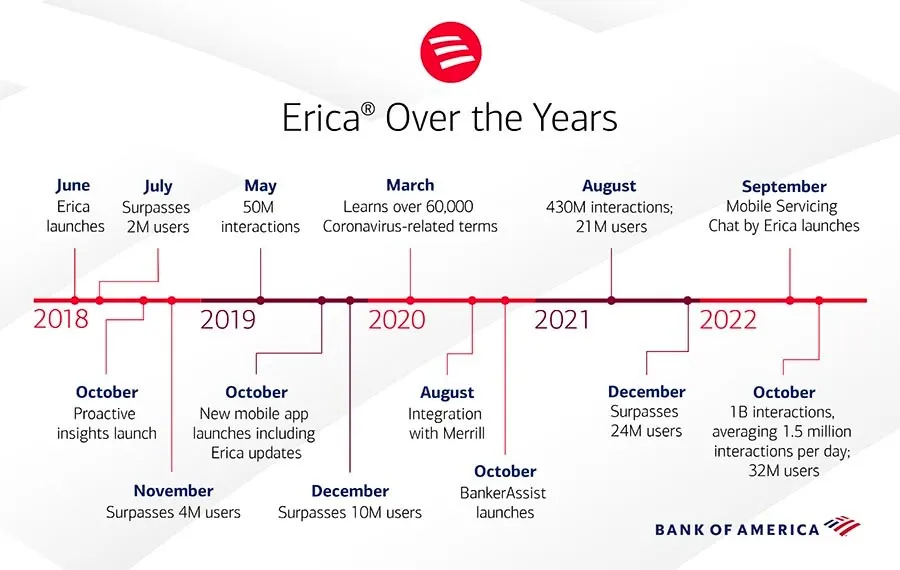
AI and Client Communication: The Morgan Stanley Journey
 Communicating with clients effectively is vital for maintaining strong relationships in the world of investment banking. Recognising the power of AI in this domain, Morgan Stanley has pioneered the integration of this advanced technology into its client communication practices.
Implementing AI: The Introduction of "Next Best Action"
In 2018, Morgan Stanley introduced an AI-driven system called "Next Best Action". This system uses machine learning and advanced analytics to provide financial advisors with personalised recommendations for their clients, thus enhancing the quality and relevance of client communication.AI-Driven Communication in Action
The "Next Best Action" system sifts through vast amounts of data, including market trends, economic indicators, and individual clients' investment histories and preferences. It then generates personalised recommendations for each client, which are shared with the financial advisors. This enhances the relevance of communication with clients and allows the advisors to proactively address client needs, building stronger client relationships. The system also assists in identifying potential opportunities or risks for the clients, enabling advisors to provide timely advice.The Impact: Personalised Communication and Stronger Client Relationships
The introduction of AI in client communication has significantly benefitted Morgan Stanley. The bank has reported improved client engagement and satisfaction due to the personalised and proactive communication approach. Additionally, the AI-driven system has allowed financial advisors to manage their client portfolios more effectively, leading to better client outcomes.OpenAI
In March 2023, Morgan Stanley Wealth Management (MSWM) unveiled a strategic initiative to develop a customised solution in collaboration with OpenAI. This initiative aims to utilise OpenAI's cutting-edge technology for accessing, processing, and integrating content. The goal is to effectively incorporate MSWM's intellectual capital, comprising insights into various companies, sectors, asset classes, capital markets, and global regions. Through this internal capability, Financial Advisors and their teams can ask questions and analyse vast amounts of content and data. The responses will be presented in a user-friendly format generated from MSWM's content, accompanied by links to the source documents. Continuous interactions and feedback from these queries will contribute to refining the offering while simultaneously enabling Financial Advisors to enhance their client services.AI and Risk Assessment: The J.P. Morgan Chase Journey
Recognising the potential of AI in enhancing efficiency and accuracy, J.P. Morgan Chase has been pioneering its use within various operations, including risk assessment.Integrating AI: Unveiling the LOXM Project
In an ambitious move to modernise its operations, J.P. Morgan Chase initiated the LOXM project, a program designed to use machine learning algorithms for assessing trading risk. The project aims to equip the bank's trading operations with advanced tools to evaluate and predict potential risks in real-time. JPMorgan reported that LOXM underwent extensive training on billions of historical transactions, empowering it to execute equities trades with unparalleled speed and at optimal prices. Additionally, LOXM demonstrated the ability to offload substantial equity stakes without triggering market fluctuations. In trials, LOXM delivered remarkable cost savings and outperformed both manual and automated trading methods currently in use, as confirmed by JPMorgan.AI-Driven Risk Assessment in Action
LOXM uses machine learning algorithms to analyse vast volumes of historical trading data and detect patterns that may indicate potential risks. By continually learning from new data, the system can improve its predictive capabilities over time. The automation of risk analysis allows for faster, more informed decision-making in the trading process. For example, LOXM can provide real-time risk assessments for large orders in complex and fast-moving markets. By predicting potential market impacts and risks, LOXM enables traders to make better-informed decisions and execute orders more effectively.The Impact: Improved Accuracy and Efficiency
Implementing AI in risk assessment has yielded significant benefits for J.P. Morgan Chase. The firm has reported substantial improvements in trading efficiency and accuracy, with the AI system reducing trading costs by quickly assessing risks and suggesting optimal trading strategies. Moreover, the AI-driven risk assessment has enabled traders to focus on complex tasks, fostering creativity and strategic thinking within the team.AI and Proactive Risk Mitigation: The Goldman Sachs Story
In the high-stakes world of investment banking, effective risk mitigation is critical. Recognising the power of AI in this area, Goldman Sachs has been a forerunner in integrating this advanced technology into its risk mitigation practices.Implementing AI: The Introduction of the MARCUS Platform
In its commitment to digital innovation, Goldman Sachs launched MARCUS, an online platform that leverages AI to provide personalised financial services to clients. A significant part of MARCUS's mandate is to use machine learning algorithms to identify and mitigate risks proactively.
AI-Driven Proactive Risk Mitigation in Action
MARCUS uses machine learning algorithms to sift through vast volumes of data, from market trends and economic indicators to individual clients' investment histories and risk profiles. By analysing this data, the system can identify potential risks and recommend mitigation strategies before they materialise. For instance, the system might identify a client's overexposure to a particular sector based on market volatility or regulatory changes. It can then recommend portfolio diversification to mitigate this risk, allowing the client to proactively protect their investments.The Impact: Enhanced Risk Management and Client Satisfaction
The introduction of AI in risk mitigation has been a game-changer for Goldman Sachs. The bank has reported improved client satisfaction due to proactive and personalised risk management strategies. Moreover, the AI-driven system allows for faster, more informed decision-making, enhancing the bank's efficiency.AI and Portfolio Management: The BlackRock Approach
 As the world's largest asset manager, BlackRock recognises the need for innovation in portfolio management. To this end, it has been a leader in integrating advanced AI technologies into its practices.