
Balancing Risk and Returns for Successful Infrastructure Development
Debt structuring is a critical aspect of project finance, serving as the backbone for funding large-scale infrastructure and development projects. It involves arranging different layers of debt with varying risk levels to strike a balance between security and potential returns. In this post, we will delve into the world of debt structuring in project finance, exploring the techniques used and their impact on risk and returns.
Understanding Debt Structuring
Debt structuring is the art of organising various debt instruments in a project finance initiative. Each layer of debt represents a different type of funding, with its specific characteristics and priorities in the repayment order. The structuring process requires a thorough analysis of the project's financials, risk appetite, and the preferences of investors and lenders. It will also depend on the type of funding available for the project. This may vary depending on the project type, whether the project is taking on market or political risk and in which jurisdiction the project will be in.

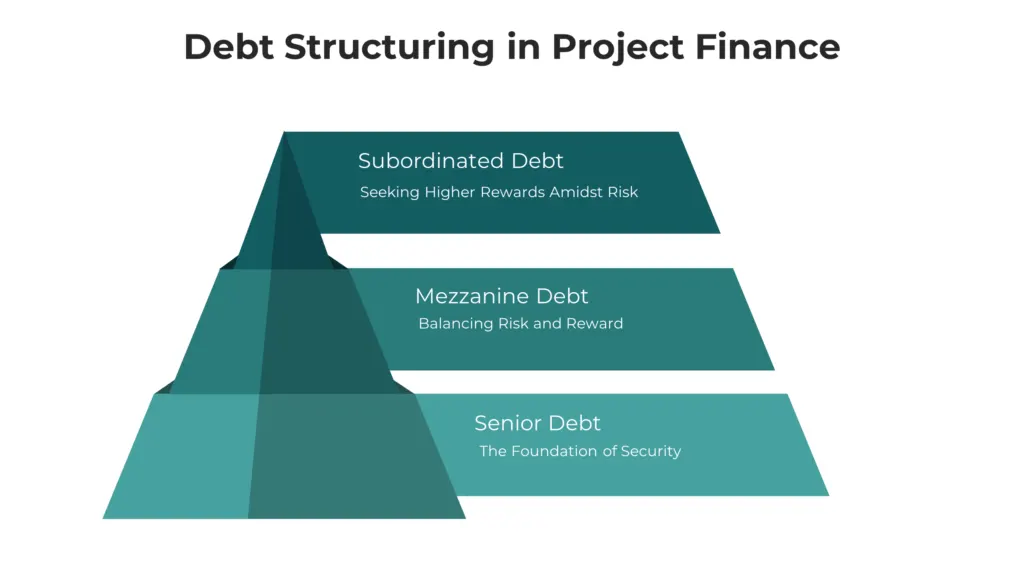
Senior Debt: The Foundation of Security
At the core of debt structuring lies senior debt, the least risky layer in the hierarchy. Typically provided by banks or financial institutions, senior debt holds the highest priority in the repayment order (after operational expenses). In case of cash flow fluctuations or project default, senior debt holders are the first to be repaid.
Due to its position of security in the cash flow waterfall, senior debt offers lower interest rates compared to other layers of debt. This feature makes it an attractive option for investors seeking a more stable and predictable source of income.
Mezzanine Debt: Balancing Risk and Reward
Mezzanine debt fills the space between senior debt and equity in terms of risk and priority. It is classified as subordinated debt, meaning it ranks lower in the repayment order than senior debt. While mezzanine debt is riskier than senior debt, it still enjoys some level of security.
To compensate for the increased risk, mezzanine debt offers higher interest rates than senior debt. This feature attracts investors looking for higher returns while retaining some level of assurance in their investment.
Subordinated Debt: Seeking Higher Rewards Amidst Risk
At the top of the debt structuring hierarchy, we find subordinated debt, the riskiest layer. Subordinated debt holders are the last to be repaid in case of project cash flow disruptions or default. As a result, subordinated debt carries the highest interest rates among the three layers.
Investors willing to take on more significant risk for the potential of higher returns are drawn to subordinated debt. While this layer involves more uncertainty, it offers the opportunity for greater rewards if the project performs well.
Balancing Act: Designing the Optimal Debt Structure
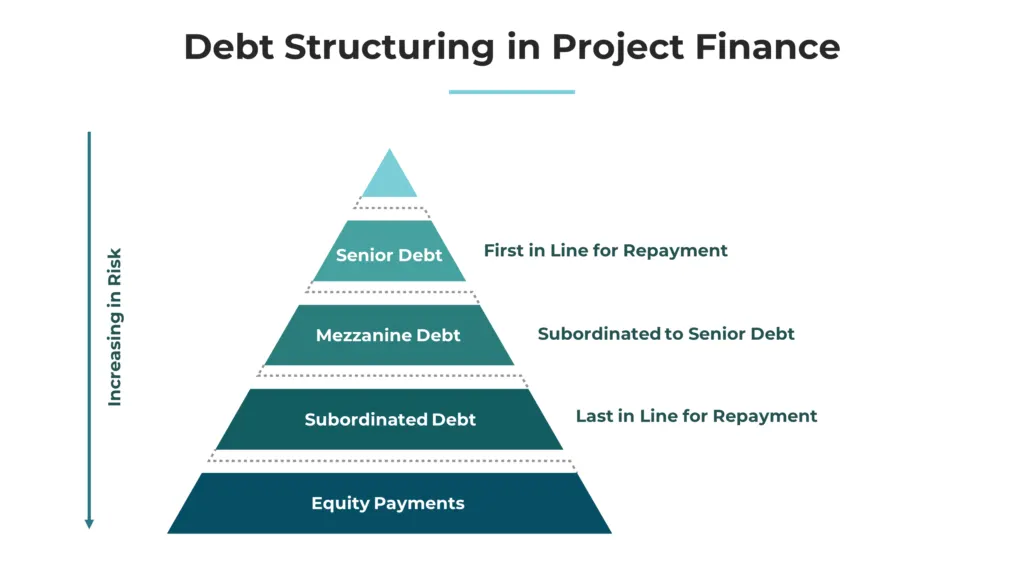
Debt structuring is not a one-size-fits-all process. Each project has unique characteristics and requirements, demanding a tailor-made approach. The project sponsor, lenders, and investors collaborate to design the optimal debt structure that aligns with the project's risk profile and financial objectives.
By effectively balancing the layers of debt, project finance stakeholders can mitigate risks and optimise returns, enhancing the overall viability and attractiveness of the project.
Conclusion
Debt structuring in project finance is a complex and crucial undertaking. It involves aligning various layers of debt to create a funding structure that accommodates the project's risk appetite and the expectations of investors and lenders. By skilfully navigating the debt structuring process, project finance initiatives can foster success and secure the funding needed to turn visionary ideas into tangible realities. The harmonious interplay of senior debt, mezzanine debt, and subordinated debt ensures a stable and sustainable financial foundation for ambitious projects, contributing to the growth and prosperity of economies worldwide.