
In the world of project finance, the term "cash flow waterfall" describes a crucial financial structure that dictates the order in which generated cash flow is distributed to various stakeholders involved in a project. This mechanism ensures funds are allocated and used effectively, promoting financial stability and satisfying all parties' contractual and operational needs. This article delves into the importance, structure, and strategic implications of cash flow waterfalls in project finance.
What is a Cash Flow Waterfall in Project Finance?
A cash flow waterfall is a sequential method of distributing the cash flows from a project finance operation. It sets out the priority sequence in which revenue from the project is allocated to different expenses, debts, reserves, and equity distributions. This structured approach is essential for managing the inherently high risks associated with financing large-scale infrastructure and industrial projects.
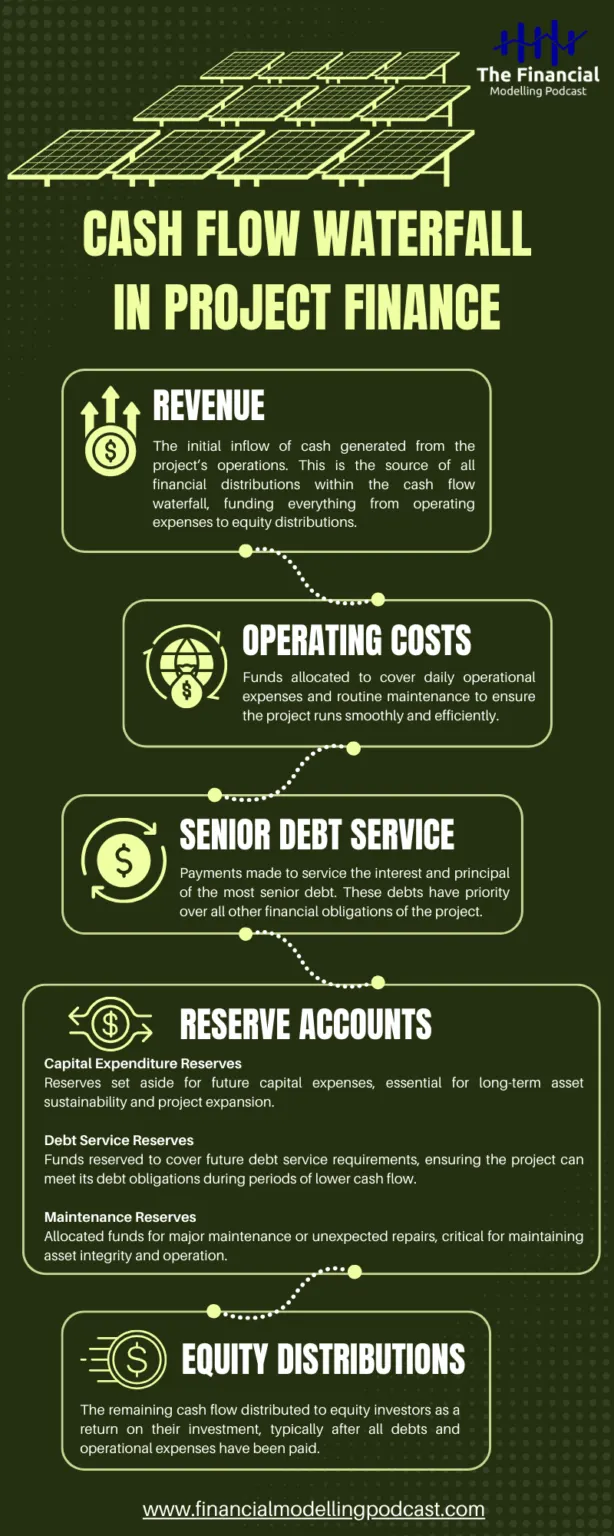
Key Components of a Cash Flow Waterfall

The cash flow waterfall model can vary between projects but typically includes several key components:
- Operating Costs: The first allocation of cash flow generally covers the project's operational costs and maintenance. Ensuring the project's operational viability is a priority.
- Senior Debt Service: The next step usually involves making scheduled debt service payments on senior loans. These loans are often secured by the project's assets and have priority over other forms of financing.
- Reserve Accounts: Before any profits are distributed, cash is often set aside in various reserve accounts, including funds for future capital expenditure, debt service reserves, or maintenance reserves.
- Subordinated Debt: Once senior debts and necessary reserves are funded, any remaining cash flow can go towards servicing subordinated or mezzanine debt, which carries higher risk and, therefore, usually commands a higher interest rate.
- Equity Distributions: Any remaining cash flows after all debts and reserves can then be distributed to equity investors as a return on their investment.
Benefits of a Cash Flow Waterfall
The structured approach of a cash flow waterfall offers several benefits:
- Risk Mitigation: By prioritizing debt service and operational costs, the structure ensures that the project remains financially healthy and operationally sound.
- Investor Assurance: Investors and lenders are more likely to commit funds to a project if there is a clear, contractual stipulation on how cash flows will be distributed, providing them visibility and predictability of returns or debt repayment.
- Regulatory Compliance: Waterfall structures help ensure that funds are available to meet regulatory requirements, such as environmental regulations or mandatory reserve contributions.
Challenges and Considerations
Despite its benefits, the cash flow waterfall structure is not without challenges:
- Complexity in Management: Managing the distributions according to the waterfall can be complex, especially when dealing with multiple stakeholders and fluctuating project revenues.
- Inflexibility: Once the terms of the waterfall are contractually agreed upon, altering them can be difficult, which might limit the project company's ability to respond to unexpected financial needs or opportunities.
Strategic Importance in Project Finance
In project finance, the cash flow waterfall is more than just a financial tool - it is a strategic element influencing decision-making throughout the project lifecycle. It affects how projects are financed, how risks are shared, and how rewards are distributed, playing a crucial role in the project's overall financial strategy and structure.
Conclusion
The cash flow waterfall is a fundamental concept in project finance that ensures every dollar of revenue is allocated in a way that supports the project's long-term success and stability. By understanding and strategically planning the cash flow waterfall, project sponsors and financiers can enhance the feasibility and attractiveness of major infrastructure projects, ensuring that all parties' financial interests are aligned and protected. As such, mastering this concept is essential for anyone involved in project finance's complex yet rewarding arena.