
A well-structured project finance model is crucial for effective decision-making, risk assessment, and project evaluation. This article breaks down the key components of a project finance model and explains how they interconnect to create a comprehensive financial analysis tool.
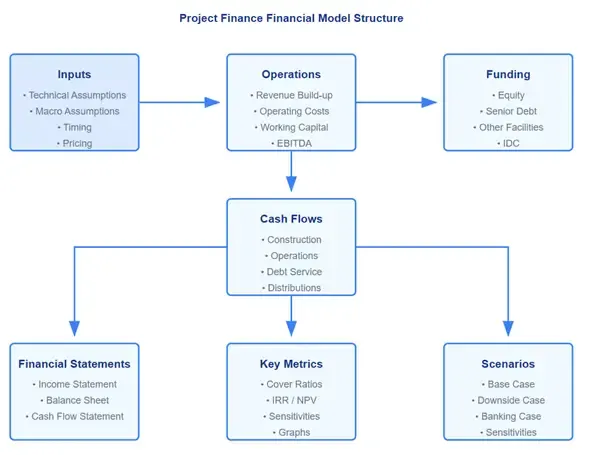
Inputs Section
The foundation of any project finance model starts with clearly defined inputs. These are typically segregated into:
Technical Assumptions
- Production/capacity metrics
- Technical efficiency rates
- Maintenance periods
- Construction timeline
Macro Assumptions
- Inflation rates
- Exchange rates
- Tax rates
- Interest rates
Timing
- Construction period
- Operating period
- Maintenance schedules
- Debt repayment schedule
Pricing
- Revenue tariffs/prices
- Cost escalation factors
- Contract prices
- Market price forecasts
Operations Section
This section transforms inputs into operational projections:
Revenue Build-up
Calculation of project revenues based on:
- Production volumes
- Pricing mechanisms
- Availability factors
- Performance deductions
Operating Costs
- Fixed costs
- Variable costs
Maintenance costs
- Insurance
- General & administrative expenses
Working Capital
- Accounts receivable
- Accounts payable
- Inventory management
- Working capital facility calculations
EBITDA
- Consolidated earnings before interest, tax, depreciation, and amortisation
- Key metric for operational performance
Funding Section
Details the project's financing structure:
Equity
- Shareholder contributions
- Equity drawdown schedule
- Return calculations
Senior Debt
- Facility size and terms
- Drawdown schedule
- Repayment profile
- Interest calculations
Other Facilities
- Working capital facilities
- VAT facilities
- Standby facilities
- Reserve accounts
- IDC (Interest During Construction)
- Capitalisation schedule
- Interest calculations during construction
- Impact on total project cost
Cash Flows Section
Integrates operations and funding to project cash movements:
Construction
- Capital expenditure schedule
- Pre-operating costs
- Sources and uses of funds
Operations
- Operational cash inflows
- Maintenance capex
- Working capital movements
Debt Service
- Principal repayments
- Interest payments
- Reserve account movements
- Coverage ratio calculations
Distributions
- Dividend calculations
- Distribution waterfall
- Lock-up provisions
- Cash sweep mechanisms
Financial Statements
Standard accounting outputs including:
Income Statement
- Revenue recognition
- Cost allocation
- Depreciation/amortisation
- Tax calculations
Balance Sheet
- Fixed assets
- Current assets
- Debt balances
- Shareholder funds
Cash Flow Statement
- Operating cash flows
- Investing activities
- Financing activities
Key Metrics
Critical measures for project evaluation:
Cover Ratios
- Debt Service Coverage Ratio (DSCR)
- Loan Life Coverage Ratio (LLCR)
- Project Life Coverage Ratio (PLCR)
IRR / NPV
- Project IRR
- Equity IRR
- Net Present Value calculations
- Payback periods
Sensitivities
- Key variable impacts
- Break-even analysis
- Scenario impacts
Graphs
- Visual representations of key metrics
- Trend analysis
- Comparative scenarios
Scenarios Section
Multiple cases for risk assessment:
Base Case
- Expected case scenario
- Most likely outcomes
- Agreed assumptions with lenders
Downside Case
- Stress testing
- Lower performance scenarios
- Risk assessment
Banking Case
- Conservative assumptions
- Lender's view
- Covenant testing
Sensitivities
- Single variable changes
- Combined effects
- Market fluctuations
Best Practices for Model Structure
Clear Separation
- Keep inputs separate from calculations
- Use colour coding for different cell types
- Maintain consistent formatting
Error Checking
- Build in error checks
- Use control accounts
- Include reconciliation tabs
Documentation
- Include detailed assumptions
- Document calculation methodologies
- Provide clear version control
Flexibility
- Allow for easy scenario testing
- Build in modularity
- Enable easy updates
Conclusion

A well-structured project finance model is essential for successful project evaluation and monitoring. Following this structured approach, you can build robust, reliable, and user-friendly financial models that are effective decision-making tools for all project stakeholders.
Remember that while this structure provides a solid framework, each project may require specific modifications based on its unique characteristics, requirements, and complexity. The key is to maintain clarity, consistency, and logical flow throughout the model.